
Collection model:
Kitchen waste collected door to door with wheeled bins; 51% of households connected, others compost at home. Garden waste collected at bring centres.
Treatment model:
Kitchen and garden waste treated at six small-scale farmer-operated composting facilities (≤1,400 t/year each).
Key elements:
PAYT for kitchen and residual waste based on bin size/frequency; kitchen waste fee = 60% of residual waste; compostable bags (EN 13432) provided annually; higher summer collection frequency.
Evidence of success:
(2022 data) 74% MSW separate collection rate. Kitchen waste: 66 kg/inhab./yr. Garden waste: 104 kg/inhab./yr.
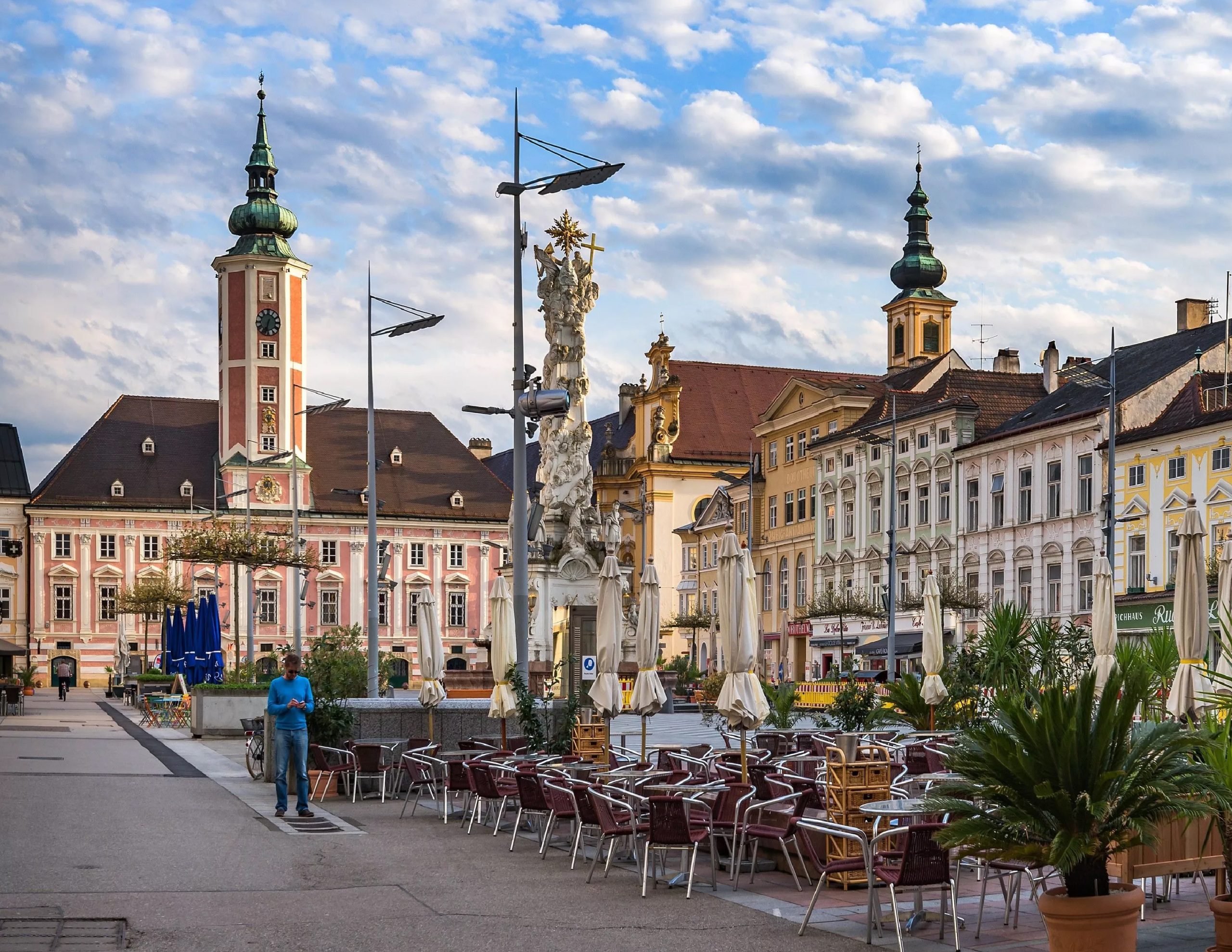
Austria
Scale: Regional
Demographic type: Rural
Population: 104,000 inh.; 100 inh./km² (2022)
Organisation in charge: GVU (Gemeindeverband für Umweltschutz und Abgabeneinhebung) – managing MSW for 37 municipalities in St. Pölten district
Source:
LIFE BIOBEST (2024). D3.1 Guidelines on Separate Collection: Annex 1 — Best Practice Cases on Bio-waste Collection.