This report presents a detailed assessment of bio-waste collection, treatment capacity, market development and economic performance across the EU27, Norway, Switzerland and the United Kingdom (2019–2020 data). Based on survey data from national associations and operators, the report quantifies separately collected bio-waste volumes, treatment pathways, infrastructure distribution and end-markets for compost and digestate.
The report shows that 71 million tonnes of bio-waste are treated annually through composting and anaerobic digestion, with composting accounting for the majority share. It analyses the structure of approximately 5,800 treatment facilities, including plant size, feedstock composition and the balance between municipal and commercial bio-waste streams. Differences between countries are highlighted, both in total treatment volumes and per capita performance, revealing significant regional variation in collection efficiency and infrastructure development.
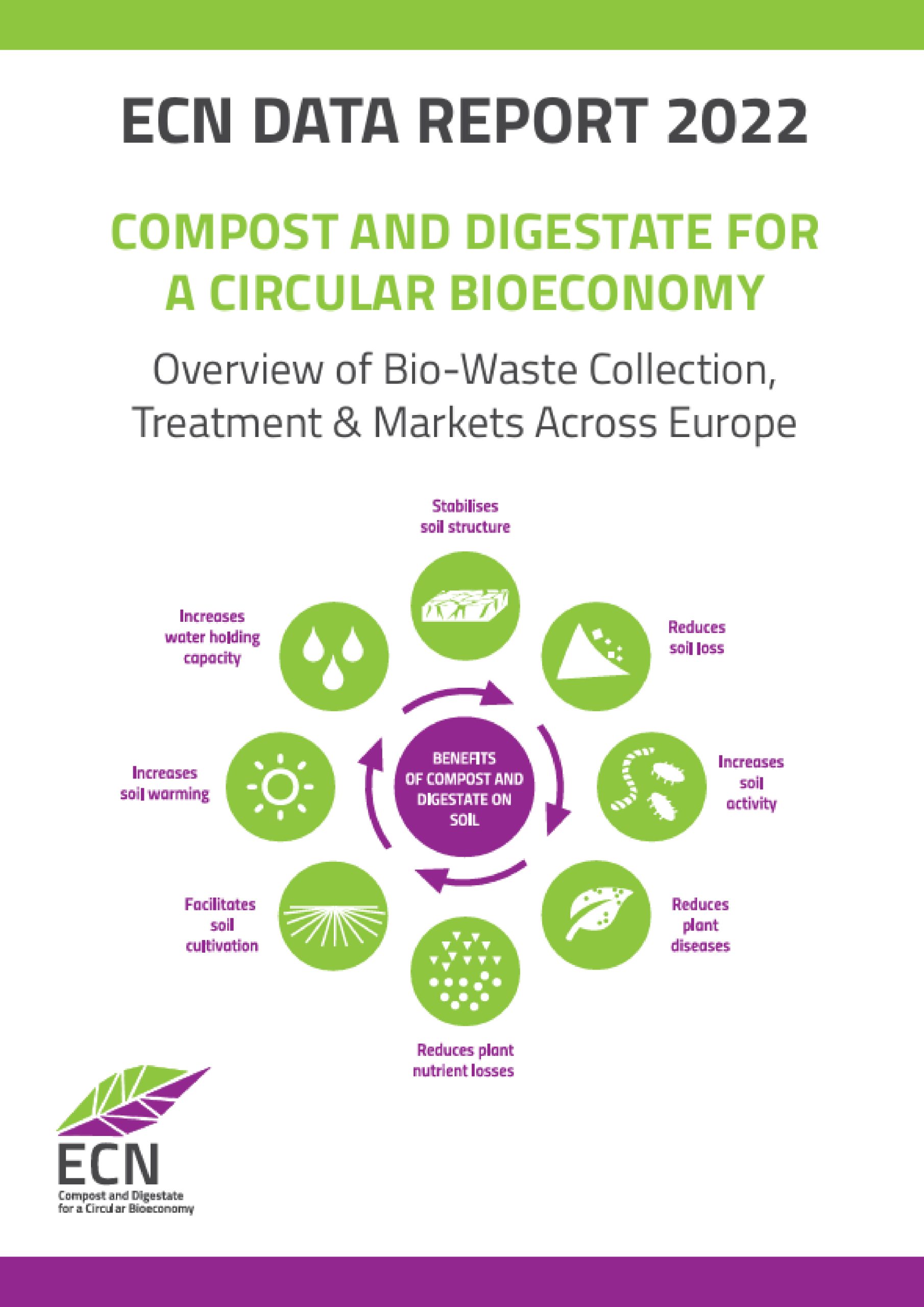
Beyond treatment data, the report examines market outlets, price levels and the agronomic value of compost and digestate, including nutrient content, soil improvement potential and carbon sequestration benefits. It also evaluates the economic contribution of the sector in terms of employment and GDP, and reviews quality assurance schemes supporting product reliability.
Finally, the report projects future treatment needs based on EU recycling targets and outlines the infrastructure expansion required, providing a data-driven foundation for policymakers, industry stakeholders and circular bioeconomy planning.
Publication year: 2022
Language: EN
Published by: European Compost Network (ECN)
Keywords: European Union, cross-country comparison, bio-waste treatment, composting, anaerobic digestion, nutrient recycling, soil improvement, carbon sequestration, waste infrastructure, quality assurance scheme