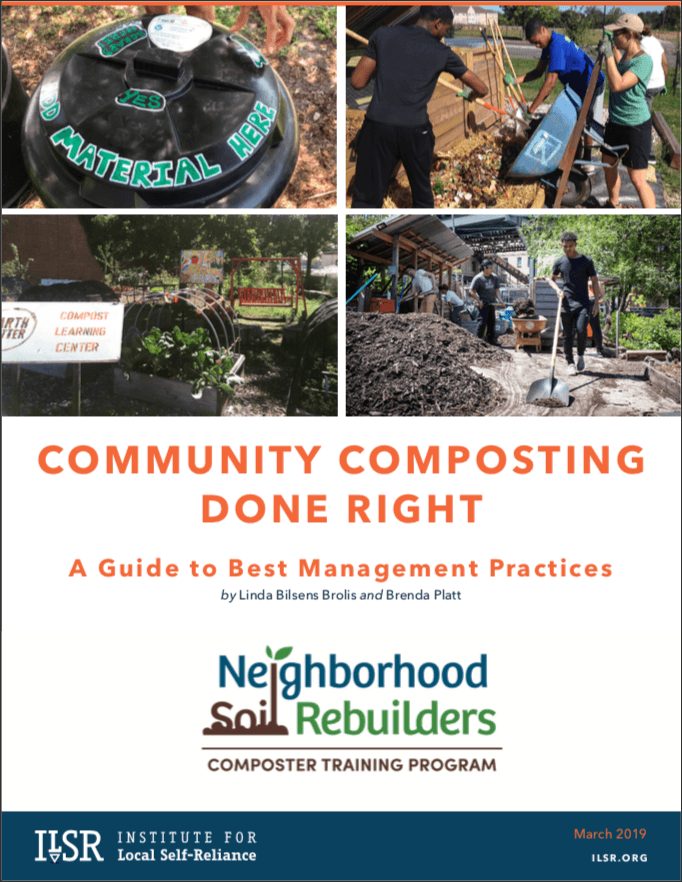
The report supports community-scale composting by offering practical guidance drawn from commercial composting standards, especially for sites handling food scraps. It explains how local operations can engage and educate residents, create jobs, and boost climate resilience through soil improvement. Because community composting often occurs in residential areas, the guide emphasizes proper site planning, management strategies, and nuisance control to maintain good neighbor relations. It also covers technical elements—such as developing the right “recipe” for compost, monitoring and record-keeping, and ensuring health and safety—to produce high-quality finished compost. While the advice applies broadly to different systems, it’s not intended for home composting. By implementing these best management practices, communities can more effectively divert food waste, improve local soils, and build stronger, more sustainable food-waste loops.
Publication year: 2019
Language: EN
Published by: Institute for Local Self-Reliance
Keywords: community composting, food‑scrap management, best management practices, local engagement, site planning, compost recipe, monitoring, nuisance control, health and safety, high‑quality compost