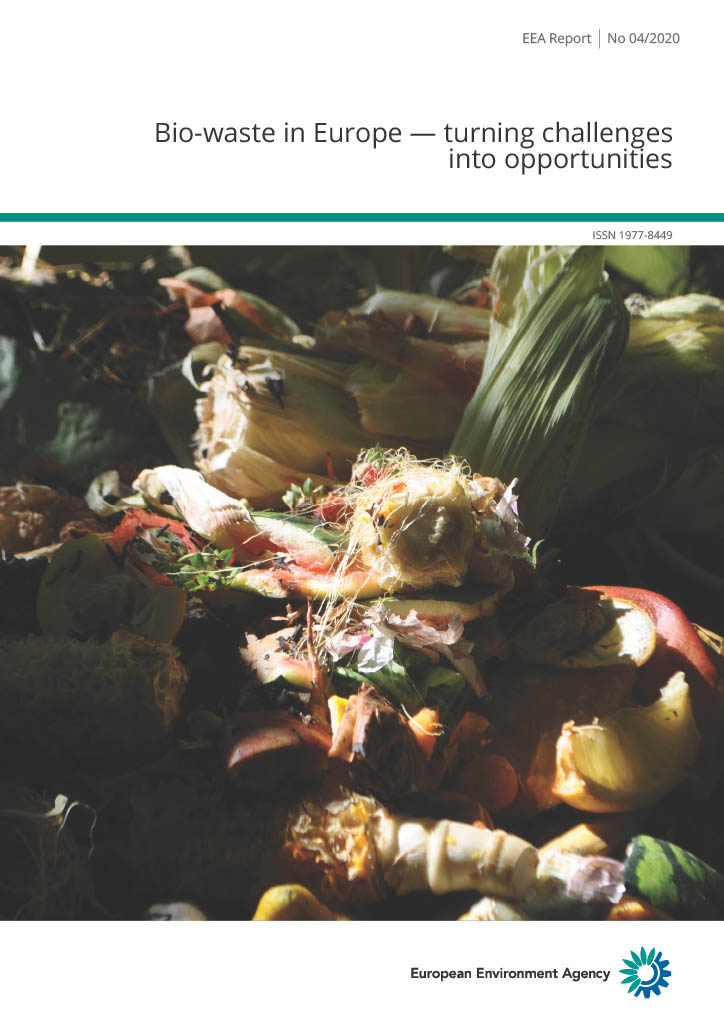
Turning Challenges into Opportunities
This report examines how bio-waste is prevented, generated, collected, and treated across Europe, with a focus on food and garden waste from households and similar commercial activities. Bio-waste plays a key role in the circular economy by reducing waste generation and supplying valuable secondary resources. EU policies increasingly emphasise bio-waste, introducing recycling targets, mandatory separate collection, and food-waste monitoring requirements aligned with Sustainable Development Goal 12.3. The Green Deal’s “Farm to Fork” strategy further strengthens efforts to prevent food waste.
Bio-waste represents over one-third of municipal waste—around 86 million tonnes in 2017—so improving its recycling is essential for meeting the EU’s 2035 target of 65% municipal waste recycling. However, separate collection varies widely between countries, and many remain far from realising bio-waste’s full potential. Effective systems require coherent policy frameworks, economic incentives such as pay-as-you-throw schemes, public awareness, and sufficient treatment capacity.
Food waste makes up about 60% of household bio-waste and is a major ethical and environmental concern. Common policy responses include awareness campaigns, redistribution initiatives, and promotion of “second-class” foods, though evaluating their effectiveness remains difficult. Composting and anaerobic digestion are the main treatment methods, with the latter expanding due to its production of renewable biogas and generally higher environmental benefits.
Publication year: 2020
Language: EN
Published by: European Environment Agency
Keywords: bio-waste, circular economy, food waste prevention, separate collection, composting, anaerobic digestion, EU waste policy, pay-as-you-throw, treatment capacity, awareness-raising